
✅ Last verified: August 2026 — Source: HMRC, GOV.UK, House of Commons Library, 2026/27 tax year rates
By Abdul Basit | Updated August 2026 | FinzoTools Blog
⚡ QUICK ANSWER
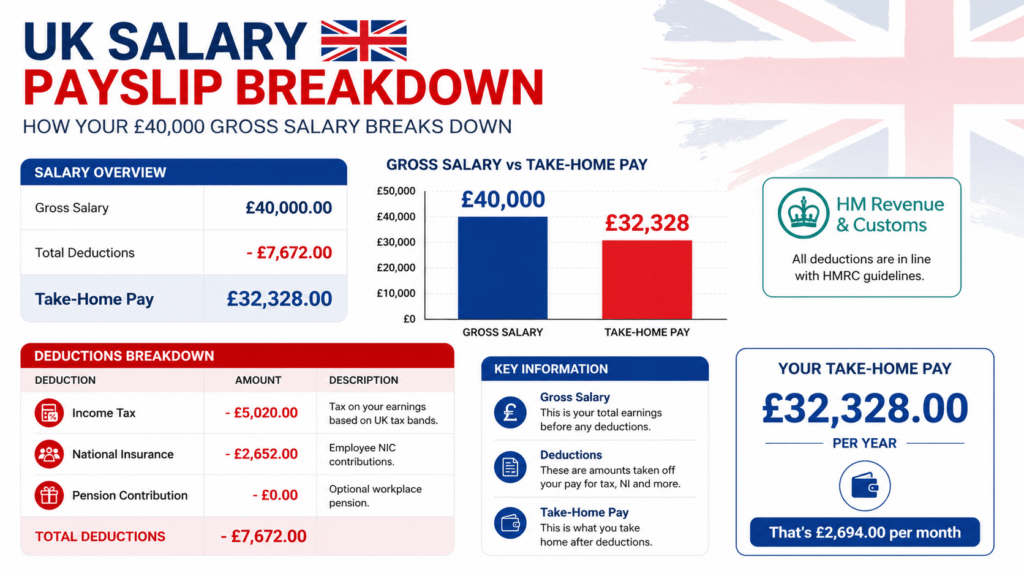
On a £40,000 salary in England, Wales, or Northern Ireland for 2026/27, your take-home pay is £32,320 per year or £2,693 per month after income tax (£5,486) and National Insurance (£2,194). In Scotland, you’ll take home slightly less — £32,150 per year (£2,679/month) — due to the intermediate rate band. Your effective tax rate is 19.2%. All of your taxable income falls within the 20% basic rate band. Use our free UK Salary Calculator for your exact take-home on any salary.
£40,000 sits above the UK median salary of roughly £35,000, placing you around the 58th percentile of full-time earners. It’s comfortably inside the basic rate band — you won’t touch the 40% higher rate until you pass £50,270 — which means you keep just over 80p of every pound earned.
But the headline number doesn’t tell the whole story. Student loans, pension contributions, and whether you live in Scotland all change what actually hits your bank account. And with the personal allowance and tax thresholds frozen until 2030/31, “fiscal drag” means that a £40K salary today is taxed more heavily in real terms than it was five years ago.
This guide breaks down every deduction and shows exactly what you keep — with comparisons at different salary levels, student loan plans, and between Scotland and England.
£40K after tax — complete breakdown 2026/27
| Deduction | Annual | Monthly | How it’s calculated |
|---|---|---|---|
| Gross salary | £40,000 | £3,333 | — |
| Personal Allowance | £12,570 | £1,048 | Tax-free — first £12,570 of income |
| Income Tax (20%) | £5,486 | £457 | 20% on £27,430 (£40,000 − £12,570) |
| National Insurance (8%) | £2,194 | £183 | 8% on earnings £12,570–£50,270 |
| Total deductions | £7,680 | £640 | — |
| Take-home pay | £32,320 | £2,693 | — |
| Weekly take-home | — | — | £622/week |
| Daily take-home | — | — | £124/day (5-day week) |
| Hourly rate (37.5hr week) | — | — | £16.60/hr net |
| Effective tax rate | — | — | 19.2% |
Source: House of Commons Library — Direct taxes 2026/27, HMRC PAYE rates
At £40,000, every additional pound you earn is taxed at 28% (20% income tax + 8% NI). This marginal rate stays the same until you reach £50,270, where the 40% higher rate begins and the NI rate drops to 2%.
How income tax and NI work on £40,000
The UK uses a progressive tax system — you don’t pay 20% on the entire £40,000. The first £12,570 is completely tax-free (your Personal Allowance), and only the remaining £27,430 is taxed at the basic rate of 20%.
National Insurance works similarly but with different thresholds. You pay 8% on earnings between £12,570 (the primary threshold) and £50,270 (the upper earnings limit). Since £40,000 is below the upper limit, all your NI-liable earnings are charged at the main 8% rate.
Your employer pays a separate NI contribution of 15% on your earnings above £5,000 — roughly £5,250 on a £40K salary. This doesn’t come out of your pay, but it does mean your total employment cost to your employer is approximately £45,250.
£40K take-home pay — Scotland vs England 2026/27
Scotland sets its own income tax rates through the Scottish Rate of Income Tax (SRIT). The system has six bands compared to England’s three. On a £40,000 salary, part of your income falls into Scotland’s 21% intermediate band, which doesn’t exist in the rest of the UK.
| Item | England / Wales / NI | Scotland |
|---|---|---|
| Gross salary | £40,000 | £40,000 |
| Personal Allowance | £12,570 | £12,570 |
| Tax calculation | £27,430 × 20% = £5,486 | Starter 19% + Basic 20% + Intermediate 21% |
| Income tax | £5,486 | £5,656 |
| National Insurance | £2,194 | £2,194 |
| Annual take-home | £32,320 | £32,150 |
| Monthly take-home | £2,693 | £2,679 |
| Difference | — | £170 less per year (£14/month) |
The gap is modest — about £14 per month. National Insurance is identical across the UK since it’s set by Westminster. The difference comes entirely from Scotland’s intermediate band charging an extra 1% on a portion of income that England taxes at 20%.
Scotland’s system has six income tax bands for 2026/27: Starter (19%), Basic (20%), Intermediate (21%), Higher (42%), Advanced (45%), and Top (48%). At £40,000, you won’t touch the 42% higher rate — that doesn’t start until £43,663 of taxable income (approximately £56,233 gross).
Take-home pay at different UK salary levels — £25K to £80K
How does take-home change as salary increases? The progressive tax system means each band is taxed at a higher rate. Here’s the full picture for England, Wales, and NI in 2026/27:
| Gross Salary | Income Tax | National Insurance | Annual Take-Home | Monthly Take-Home | Effective Rate |
|---|---|---|---|---|---|
| £25,000 | £2,486 | £994 | £21,520 | £1,793 | 13.9% |
| £30,000 | £3,486 | £1,394 | £25,120 | £2,093 | 16.3% |
| £35,000 | £4,486 | £1,794 | £28,720 | £2,393 | 17.9% |
| £40,000 | £5,486 | £2,194 | £32,320 | £2,693 | 19.2% |
| £45,000 | £6,486 | £2,594 | £35,920 | £2,993 | 20.2% |
| £50,000 | £7,486 | £2,994 | £39,520 | £3,293 | 20.9% |
| £60,000 | £11,432 | £3,194 | £45,374 | £3,781 | 24.4% |
| £80,000 | £19,432 | £3,594 | £56,974 | £4,748 | 28.8% |
| £100,000 | £27,432 | £3,994 | £68,574 | £5,714 | 31.4% |
Notice the jump between £50,000 and £60,000 — that’s where the 40% higher rate begins (at £50,270). A £10,000 pay rise from £50K to £60K adds only £488/month to take-home, compared to £600/month for the same rise from £30K to £40K. The tax system takes a bigger bite from every pound once you cross that threshold.
At £100,000, an even more painful trap awaits. Your Personal Allowance starts tapering — you lose £1 of allowance for every £2 earned above £100K, creating an effective 60% marginal rate between £100K and £125,140.
£40K with student loan — how repayments affect your take-home
Student loan repayments are collected automatically through PAYE. They’re not technically a tax, but they reduce your take-home in exactly the same way. The plan you’re on determines how much is deducted:
| Student Loan Plan | Threshold 2026/27 | Repayment Rate | Annual Repayment | Monthly Take-Home |
|---|---|---|---|---|
| No student loan | — | — | £0 | £2,693 |
| Plan 1 (pre-2012) | £24,990 | 9% | £1,351 | £2,581 |
| Plan 2 (post-2012) | £27,295 | 9% | £1,143 | £2,598 |
| Plan 4 (Scotland) | £31,395 | 9% | £774 | £2,629 |
| Plan 5 (from 2023) | £25,000 | 9% | £1,350 | £2,581 |
| Postgraduate Loan only | £21,000 | 6% | £1,140 | £2,598 |
| Plan 2 + Postgrad | Both thresholds | 9% + 6% | £2,283 | £2,503 |
With both a Plan 2 undergraduate and Postgraduate loan, take-home drops by £190/month compared to having no student loan. Over a year, that’s £2,283 in loan repayments — on top of £7,680 in tax and NI.
The silver lining: unlike tax, student loan repayments eventually end. Plan 2 loans are written off 30 years after graduation, and Plan 5 loans after 40 years. If you won’t repay the full balance in that time, overpaying your loan is usually a poor use of money.
How pension contributions reduce your tax on £40K
Pension contributions are the single most effective tax reduction tool at this salary level. There are two main methods:
Relief at source (the standard method): Your contribution comes from your net pay. HMRC adds 20% tax relief automatically. A 5% contribution costs you £2,000/year, but £2,500 actually goes into your pension — HMRC tops up the other £500.
Salary sacrifice: Your employer reduces your gross pay and puts the difference into your pension. You save both income tax and National Insurance. A 5% sacrifice on £40K costs you approximately £1,440 from your take-home but puts £2,000 into your pension — because the £2,000 is never taxed or NI’d.
| Pension Rate | Annual Cost to You | Goes Into Pension | Monthly Take-Home |
|---|---|---|---|
| No pension | £0 | £0 | £2,693 |
| 5% (auto-enrolment minimum) | £1,600 | £2,000 | £2,560 |
| 8% (total with employer 3%) | £2,560 | £3,200 + £1,200 employer | £2,480 |
| 10% salary sacrifice | £2,880 | £4,000 | £2,453 |
Going from the auto-enrolment minimum (5%) to 10% via salary sacrifice costs you £240/month less take-home but adds £333/month to your pension fund — a guaranteed 39% instant return before any investment growth.
The fiscal drag problem — why £40K buys less every year
The Personal Allowance and basic rate threshold have been frozen at £12,570 and £50,270 since 2021, and will stay frozen until April 2030/31. Meanwhile, wages have risen with inflation. The result is “fiscal drag” — more of your income is pushed into taxable bands each year, even if your real spending power hasn’t changed.
If the Personal Allowance had risen with CPI inflation since 2021, it would be roughly £15,400 today. That means a £40K earner is paying about £566 more in tax per year than they would with an inflation-matched allowance — an invisible stealth tax that compounds every year the freeze continues.
Is £40,000 a good salary in the UK?
By the numbers, yes. £40,000 is above the UK median full-time salary of approximately £35,000, placing you in the top 42% of earners. It sits entirely within the basic rate band, so you avoid the 40% higher rate that kicks in at £50,270.
What £40K buys in practice depends heavily on where you live. In most cities outside London and the South East, it provides genuine comfort — enough for rent or a modest mortgage, a car, regular savings, and reasonable discretionary spending. In London, it’s tight. Average London rent of roughly £2,290/month would consume 85% of your take-home, leaving little room for anything else. Many Londoners on £40K flat-share or live in outer zones to make the numbers work.
For context, the National Living Wage for a full-time worker is approximately £23,800/year in 2026/27. At £40,000, you’re earning 68% more than the legal minimum — but after progressive taxation, the take-home gap is closer to 52%.
Tips to increase your take-home on £40K
- Claim marriage allowance: If your spouse earns below £12,570, they can transfer £1,260 of their allowance to you — saving £252/year.
- Use salary sacrifice for pension: Saves both tax and NI compared to relief at source.
- Claim work-from-home relief: If your employer requires you to work from home, you can claim £6/week (£312/year) without receipts.
- Check your tax code: An incorrect tax code (anything other than 1257L if you have one job and no benefits) means you could be overpaying. Check your payslip and call HMRC if it looks wrong.
- Cycle to Work scheme: Save 32% on a bike purchase (combined income tax + NI saving) through salary sacrifice.
- Use your ISA allowance: Put savings and investments into an ISA to avoid tax on interest, dividends, and capital gains. The 2026/27 ISA allowance is £20,000. See our Stocks & Shares ISA vs Cash ISA comparison.
Frequently asked questions — £40K salary UK 2026
How much is £40,000 after tax in the UK?
£32,320 per year or £2,693 per month in England, Wales, and Northern Ireland. In Scotland, it’s £32,150 per year (£2,679/month) due to the intermediate rate band.
What is the tax on a £40,000 salary UK?
Income tax is £5,486 (20% on £27,430 after the £12,570 personal allowance). National Insurance is £2,194 (8% on earnings between £12,570 and £50,270). Total deductions: £7,680.
Is £40K a good salary in the UK 2026?
Yes — it’s above the median full-time salary of roughly £35,000, placing you in the top 42% of earners. It provides comfortable living in most UK cities, though London is challenging for solo renters.
How much is £40K per month after tax?
£2,693 per month in England/Wales/NI with no student loan or pension deductions. With a Plan 2 student loan, it drops to £2,598. With a 5% pension, approximately £2,560.
How much is £40K weekly after tax?
£622 per week in England/Wales/NI, or £618 per week in Scotland.
What is the difference between £40K after tax in Scotland vs England?
Scotland has a 21% intermediate rate that doesn’t exist in England. On £40,000, this means £170 less per year (£14/month less) in Scotland. National Insurance is the same across the UK.
How much student loan do I repay on £40K?
Plan 1: £1,351/year (£113/month). Plan 2: £1,143/year (£95/month). Plan 5: £1,350/year (£113/month). Plan 4 (Scotland): £774/year. Repayment is 9% of income above the plan threshold.
What is the effective tax rate on £40,000?
19.2% — combining income tax and National Insurance. This means you keep 80.8p of every pound earned. The marginal rate on the next pound earned is 28% (20% tax + 8% NI).
How does a pension affect take-home on £40K?
A 5% pension contribution via relief at source costs roughly £133/month from your take-home but puts £167/month into your pension (with 20% tax relief). With salary sacrifice, the cost drops further because you also save 8% NI.
What tax band is £40,000 in?
Basic rate (20%) in England/Wales/NI. All £27,430 of taxable income (above the £12,570 personal allowance) is within the basic rate band. The 40% higher rate doesn’t start until £50,270.
Related tools and guides
- 🧮 UK Salary Calculator 2026/27 — get your exact take-home for any salary
- 🧮 UK Inheritance Tax Calculator — estimate your estate’s IHT liability
- 🧮 ISA Calculator 2026 — project your tax-free savings growth
- 📖 UK IHT 2026 — Thresholds & Rules
- 📖 Stocks & Shares ISA vs Cash ISA 2026
- 📖 Ireland vs UK Tax Comparison 2026
- 🏠 UK Mortgage Calculator 2026 — monthly repayment estimates
Sources & references
- House of Commons Library — Direct taxes: Rates and allowances 2026/27
- GOV.UK — Income Tax rates and Personal Allowances
- GOV.UK — National Insurance rates and categories
- GOV.UK — Repaying your student loan
- Scottish Government — Scottish Income Tax 2026/27
© 2026 FinzoTools — For educational purposes only. This is not tax advice. Verify rates at GOV.UK or consult a qualified tax adviser.